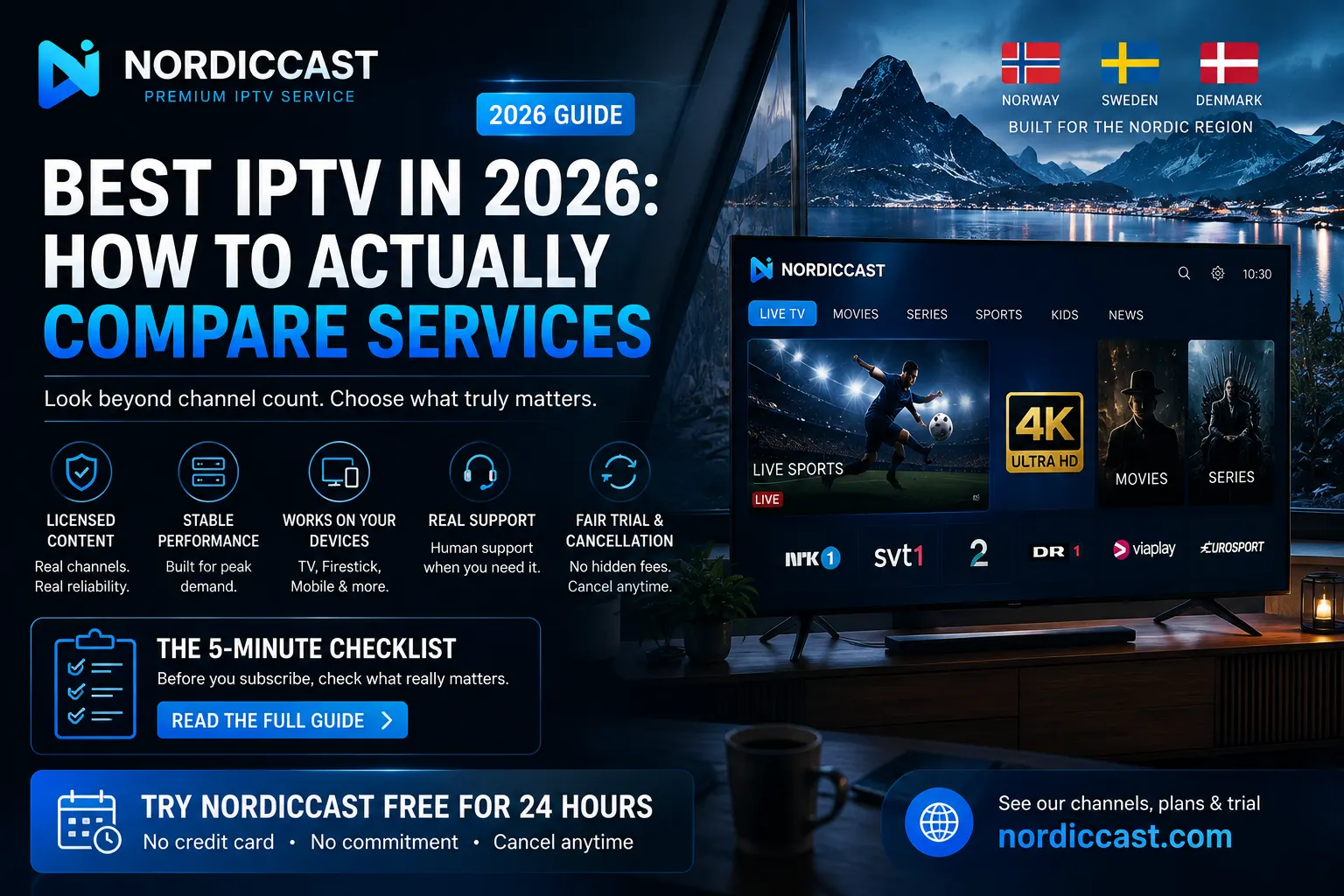
Every "best IPTV" article follows the same format: a ranked list of ten providers, each with a suspiciously round channel count and a "99.9% uptime" badge nobody can verify. None of that tells you which service will actually work for you in six months. Here's what does.
Why channel count is the wrong metric
A provider advertising 30,000 channels sounds more impressive than one advertising 15,000 — until you notice half of those channels are duplicate feeds, regional variants of the same broadcast, or dead links that were never removed from the list. Channel count is the easiest number to inflate and the hardest one to verify from a homepage. It's a starting filter, not a decision-maker.
What actually determines whether an IPTV service is good
Content licensing
This is the single biggest factor and the one most comparison sites skip entirely. Services that license directly from broadcasters and studios are structurally different from those reselling unofficial streams — the second category can lose access to content, or disappear entirely, without warning or refund. Ask directly: is this licensed, or resold?
Stability during peak demand
Any service looks fine streaming a documentary on a Tuesday afternoon. The real test is Saturday evening or during a major live event, when server load is highest. Look for providers that mention load balancing or automatic failover — vague promises of "buffer-free streaming" without an explanation of how aren't worth much.
Device compatibility with what you already own
Smart TVs from the past five to six years, Fire TV, Chromecast, and mobile apps should all be supported natively. If a provider requires buying a separate box just to get started, factor that cost into the comparison. Our device setup guide covers what each platform needs.
Trial and cancellation terms
A genuine free trial doesn't need a card upfront and doesn't auto-convert into a paid subscription without you actively choosing to continue. Cancellation should take a couple of clicks, not a support ticket and a waiting period.
Support that's actually reachable
"24/7 support" is on every provider's homepage. What differs is response time and whether a real person answers, versus a chatbot looping the same three suggestions.
A five-minute checklist before subscribing
- Is the content licensed or resold? Ask directly if it isn't stated clearly.
- Does the trial require a card, and does it auto-renew?
- Can you test on your actual TV model and internet speed, not just "compatible devices" in general?
- What's the actual cancellation process — is it self-service or does it require contacting support?
- Is there a real refund window, or is it "final sale" once you subscribe?
Running through this list takes less time than watching a single episode. It is also the only part of the decision that is genuinely within your control before you have paid anything.
The honest trade-off
IPTV has genuinely replaced cable and satellite for a large share of households — the technology works, and the price difference is real. The risk was never the format; it's picking a reseller with no accountability behind an attractive channel count and hoping it holds up. Running through the checklist above takes less time than watching a single episode, and it's the difference between a service that lasts and one that quietly disappears with your subscription fee.
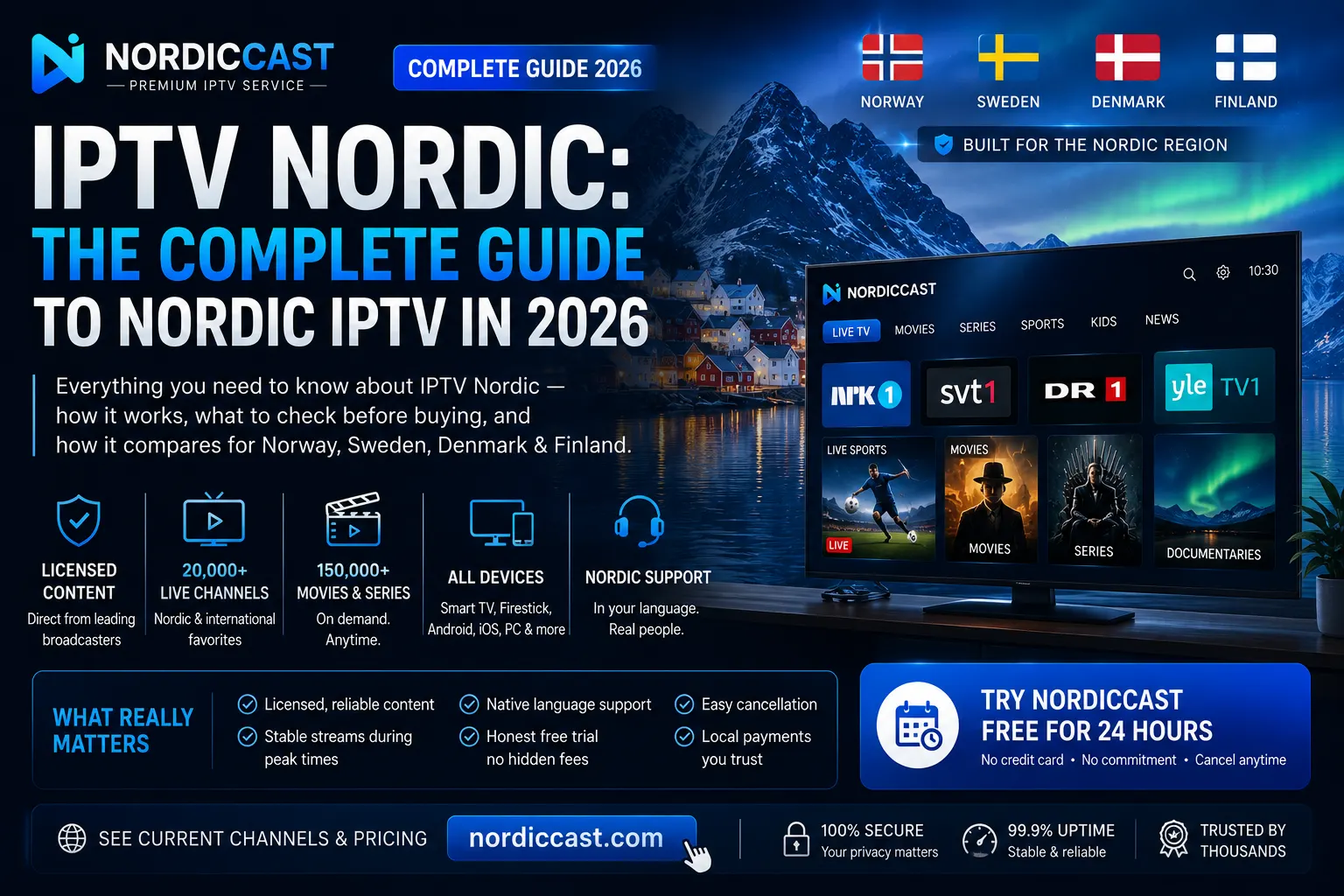
If you're specifically comparing options built for Nordic households — Norway, Sweden, Denmark and Finland — see our dedicated IPTV Nordic guide for what changes region by region, or look at current channels and pricing.